Digital Vs Stereo Microscope For Electronics Repair Uk
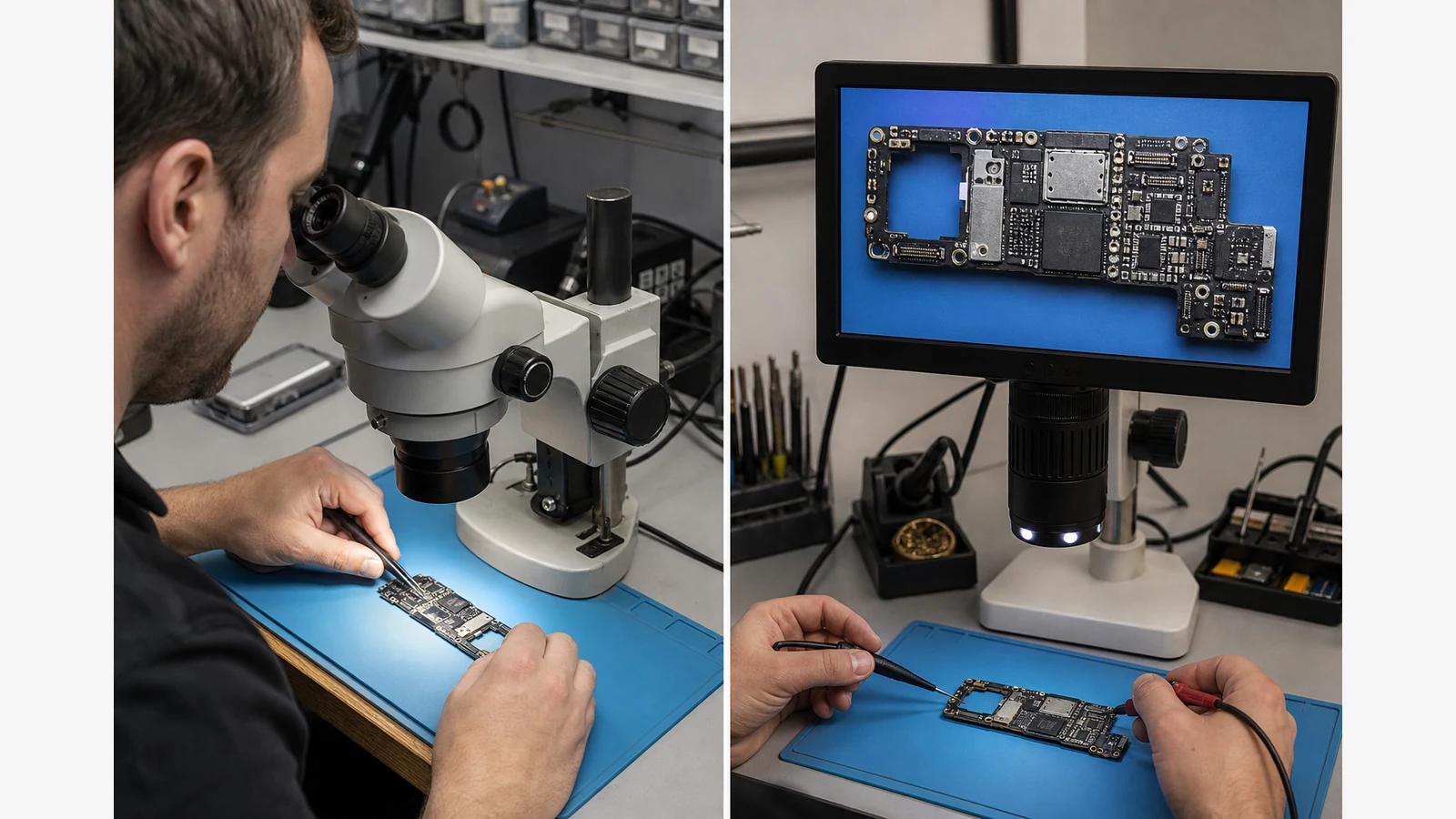
For UK electronics repair, stereo microscopes usually win depth-critical hand rework, while digital screen systems win shared viewing, upright posture and documentation. Match the tool to the heavier weekly task—live soldering versus inspection photos—rather than assuming one type fits every phone and PCB bench.
What each type actually wins
UK industrial guidance commonly prefers stereo optics when you must manipulate parts under magnification because binocular depth perception helps place tiny components safely. Digital monitor systems are framed as stronger for documentation, team viewing and less neck-bent eyepiece sessions. Soldering-focused comparisons of desk magnifiers, stereo and digital likewise highlight ergonomics and capture differences rather than a single winner.
| Factor | Stereo (eyepieces) | Digital (screen) |
|---|---|---|
| Depth perception | Stronger for fine 3D placement | Flatter; technique and lighting matter more |
| Ergonomics | Head fixed over eyepieces | Upright viewing on a monitor or built-in screen |
| Documentation | Often needs a separate camera path | Easier stills and shared live view |
| Training / sharing | One viewer at a time | Apprentice or customer can watch the same screen |
| Learning curve | Familiar to many repair techs | Learn lag, focus and lighting on a flat image |
UK side-hustle cue
Many UK phone and PCB side-hustle benches mix inspection photos with live soldering in the same week. If rework is the primary job, stereo (or a hybrid with a camera) remains the safer depth choice. If QC photos, training and customer demos dominate, a screen-first digital workflow may save more time. Depth limits on screen systems are a known trade-off—see also LCD versus USB microscope choices when you decide how the digital path connects.
Who should not buy digital-only
Technicians who feel unsafe placing 0402 or fine-pitch parts without reliable 3D depth may still need stereo or a hybrid setup. Digital-only is a poor default if your main fear is misplacing parts in Z-height, not sharing the view.
Decision path
- List the heavier weekly task: active rework versus QC photos and shared viewing.
- Choose stereo, digital or hybrid for that primary task.
- Only then fix stand clearance and lighting—start with working distance for SMD soldering and glare control on PCBs.
If you are comparing form factors rather than stereo versus screen, the product page for a standalone digital unit on this site is the Tomlov Lab Pro 7-inch digital microscope detail page. For broader PCB soldering context, see the existing PCB soldering microscope guide.