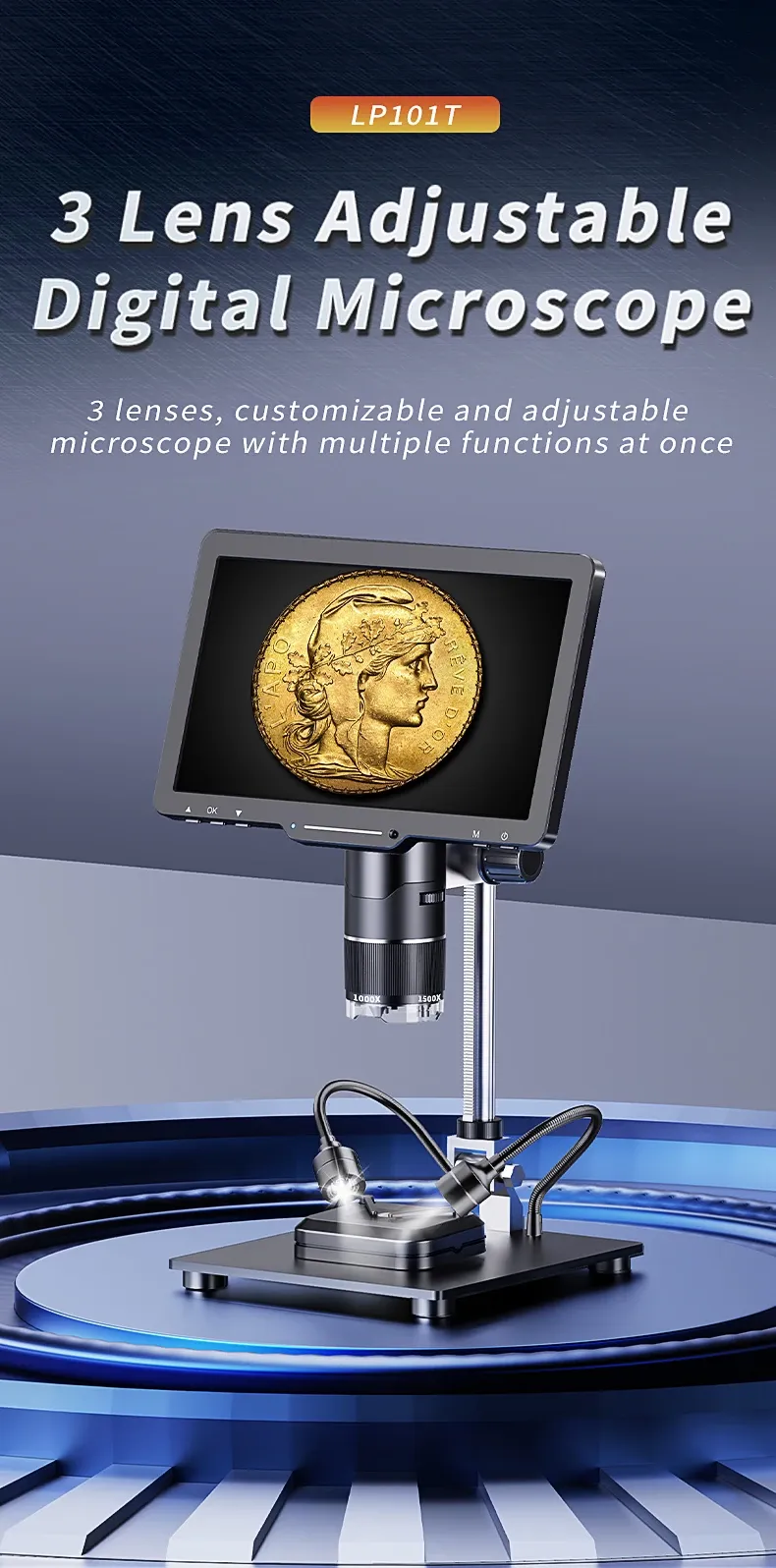
Maximising Precision: The Ultimate Guide to Choosing a Digital Microscope Industrial Inspection Camera
A practical buyer's guide for UK electronics engineers and QC managers seeking a high-specification digital microscope industrial inspection camera to improve fault-finding accuracy and manufacturing compliance in 2026.
Why a Digital Microscope Industrial Inspection Camera Matters in UK Manufacturing
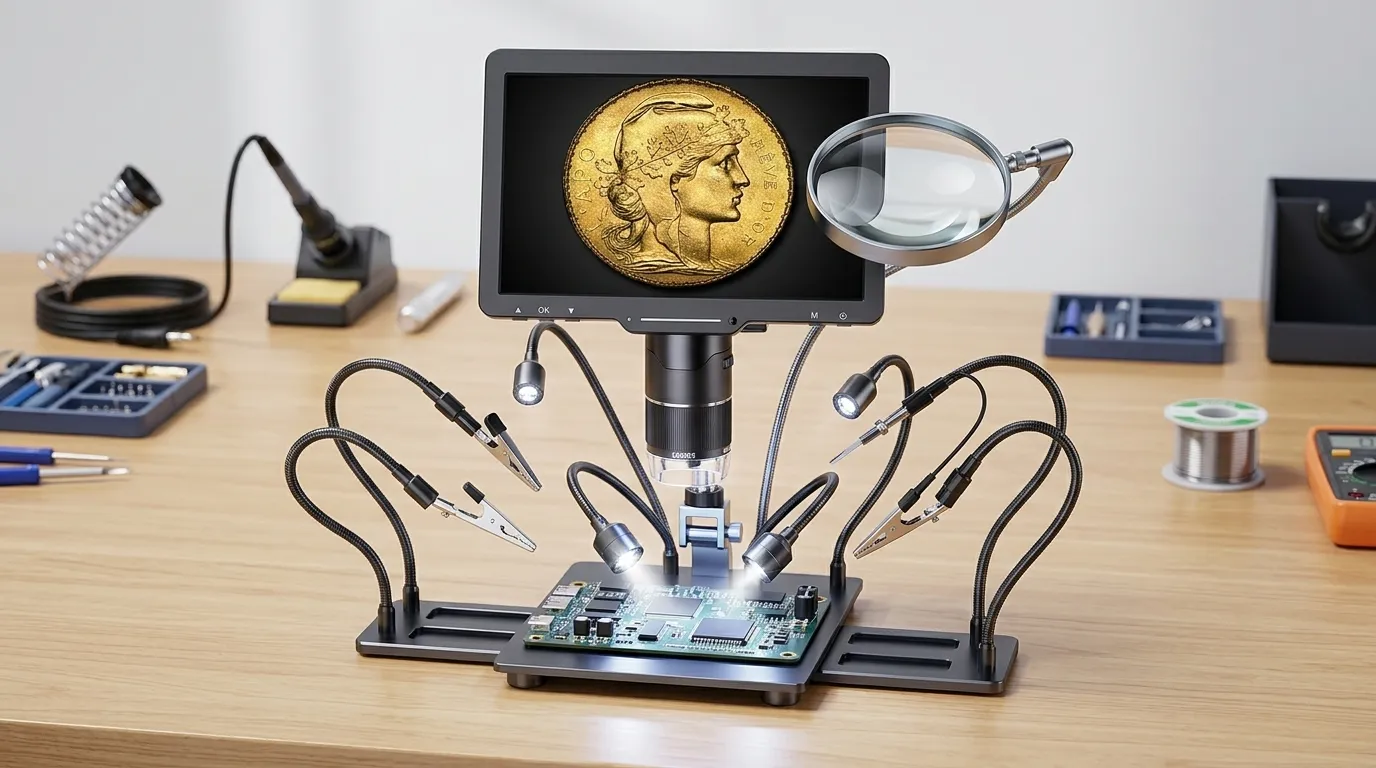
A digital microscope industrial inspection camera replaces the guesswork in quality control with measurable, repeatable visual data. That's the short version. The longer version? I've spent years teaching electronics at secondary level here in Belfast, and even in an educational setting, the difference between squinting at a dodgy solder joint under a magnifying glass versus pulling it up on a 7-inch IPS display is night and day.
For professional manufacturing environments — PCB assembly lines, aerospace component checks, medical device QC — the stakes are obviously much higher. A missed micro-crack or cold solder joint can mean product recalls, compliance failures, or worse.
The UK manufacturing sector has seen a real push toward digital inspection tools this spring. Some of that's driven by tighter post-Brexit regulatory requirements. Some of it's simply that the technology has become genuinely affordable. You can now get a professional-grade Tomlov digital microscope with 1200x magnification and a 12MP sensor without blowing your entire capital equipment budget.
The Shift from Optical to Digital
Traditional stereo microscopes still have their place. But they can't record. They can't share. They can't overlay measurements. A digital microscope with an integrated camera gives you a permanent visual record of every inspection — brilliant for audit trails and ISO documentation.
So what's actually changed in 2026? Sensor resolution has jumped significantly at the sub-£300 price point. You're now getting 12MP sensors with proper colour accuracy where three years ago you'd have been stuck with grainy 2MP USB units.
Key Specifications for Any Digital Microscope Industrial Inspection Camera
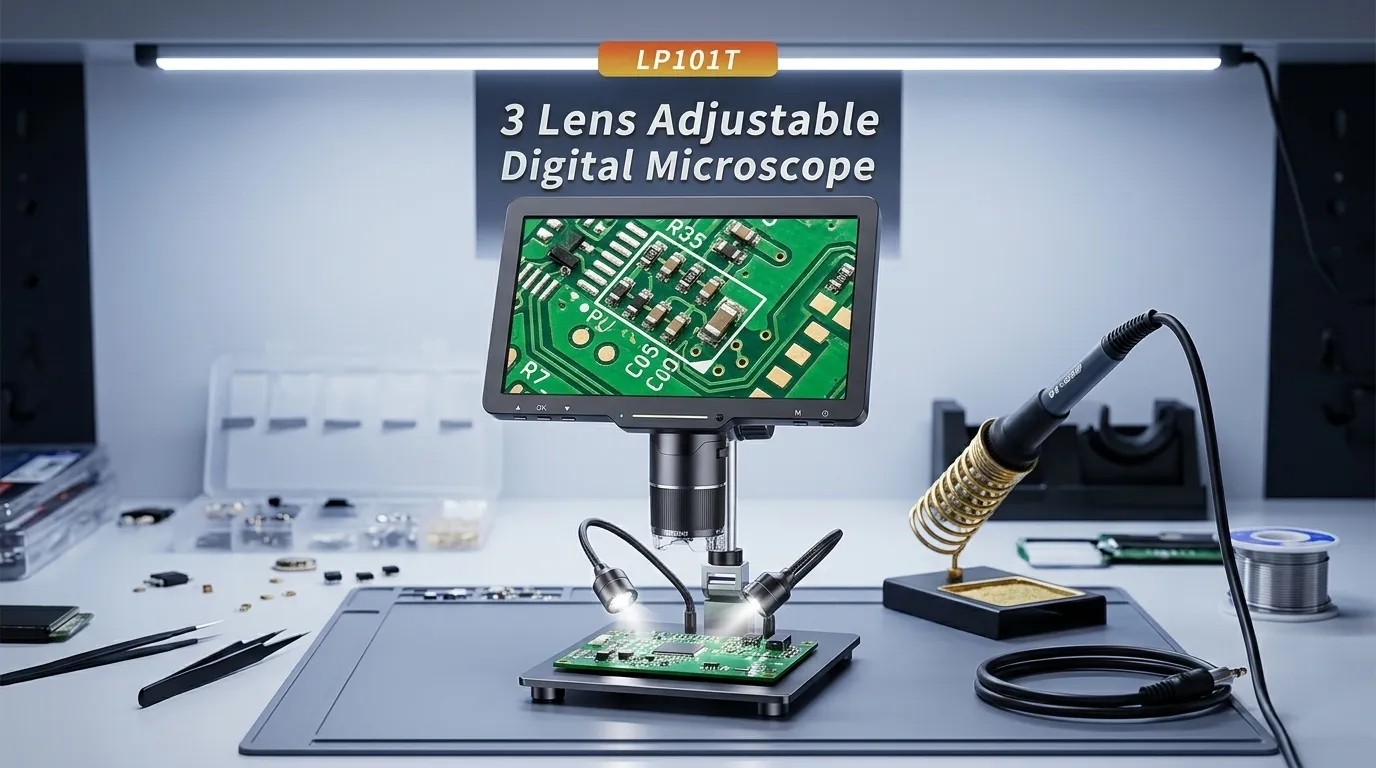
Not all specs matter equally. Here's what I'd prioritise if you're buying for a production environment rather than hobbyist use.
Magnification Range
You'll see claims of "2000x magnification" plastered across budget listings. Ignore most of them. What matters is usable magnification — the range where the image stays sharp and well-lit. For PCB work, 50x to 300x covers 90% of tasks. For micro-component inspection (0201 passives, BGA balls), you'll want up to 1200x with optical clarity maintained.
The Tomlov 7-inch IPS model delivers 1200x magnification with its 12MP sensor, which in my experience holds genuine detail up to around 800-1000x before you start losing practical sharpness. That's spot on for most industrial applications.
Sensor Resolution and Frame Rate
12MP gives you roughly 4000×3000 pixel still captures. For video inspection — watching solder flow or checking mechanical movement — you want at least 30fps at 1080p. Anything less and you'll get motion blur that defeats the purpose.
Display Size and Type
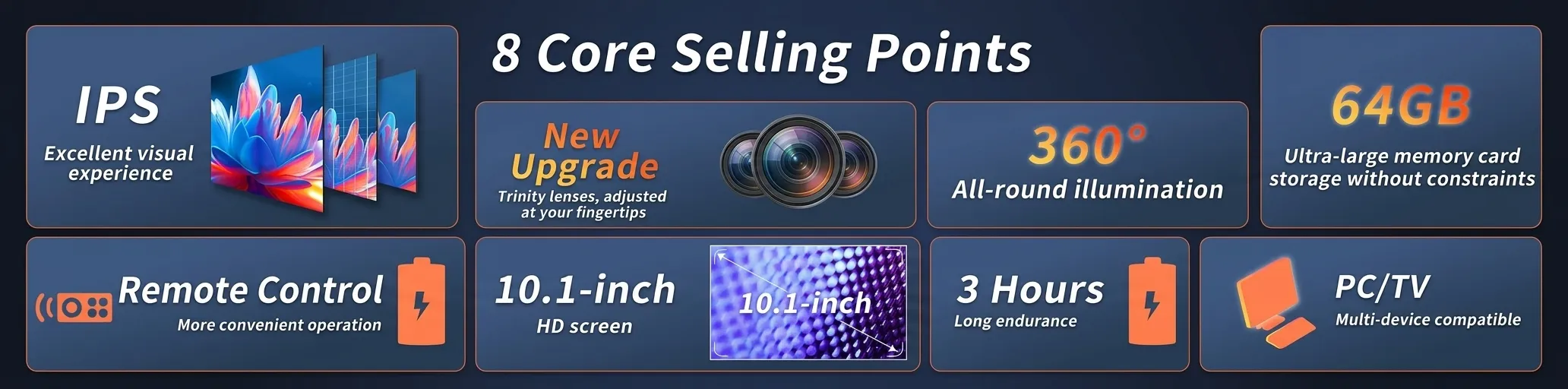
IPS panels matter here. TN displays wash out at angles, which is useless when you've got two or three people gathered round checking a reject. A 7-inch IPS screen at arm's length gives you roughly the same effective viewing area as a 21-inch monitor at desk distance. Decent for bench work without needing a separate PC connection.
Lighting
Dual lighting — both ring light and transmitted illumination — is essential for inspecting both opaque PCBs and translucent samples. Adjustable brightness prevents washout on reflective solder surfaces. I've tried cheaper alternatives with fixed LEDs and they just don't cut it for anything shiny.
Specification Comparison: Digital Microscope Options for UK Buyers
Here's how the main categories stack up. I've broken this into three tiers based on what you'd realistically find when shopping for a digital microscope in the UK this year., a favourite among Britain’s tradespeople
| Feature | Budget USB Microscope (£30-£80) | Mid-Range Standalone (£150-£300) | Professional Benchtop (£500+) |
|---|---|---|---|
| Sensor Resolution | 2-5MP | 12MP | 20MP+ |
| Magnification (usable) | 20-200x | 50-1200x | 50-2000x |
| Display | None (PC required) | 7" IPS integrated | 10"+ or HDMI output |
| Lighting | Fixed ring LED | Adjustable dual LED | Multi-axis adjustable |
| Recording | Via PC software | SD card + PC | Internal SSD + network |
| Frame Rate | 15-30fps at 720p | 30fps at 1080p | 60fps at 4K |
| Suitable For | Hobbyist, education | Production QC, rework | Metrology, R&D labs |
| Typical UK Price | £40-£75 | £180-£280 | £600-£3,000+ |
For most UK electronics manufacturers running SMT lines or doing rework, the mid-range tier hits the sweet spot. You get standalone operation (no PC dependency on the production floor), proper resolution for defect documentation, and enough magnification for BGA and fine-pitch QFP inspection.
Worth the extra spend over a USB microscope? Absolutely. The time saved not faffing about with laptop connections and driver issues on a busy production floor pays for itself within weeks.
PCB Inspection and Soldering: Where a Digital Inspection Camera Earns Its Keep
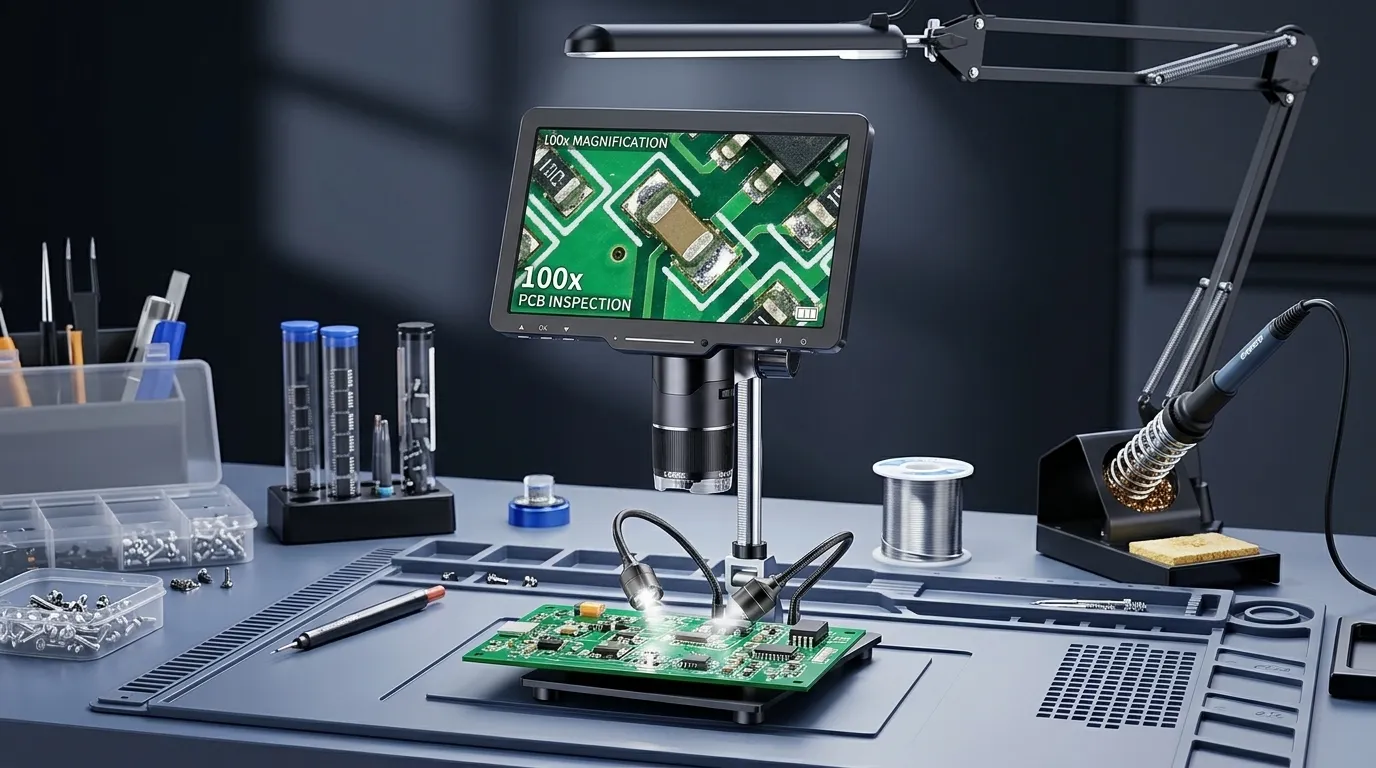
This is where these tools really prove their value. A digital microscope industrial inspection camera turns subjective "looks alright to me" assessments into documented, measurable quality checks.
Common Defects You'll Catch
At 200-400x magnification with proper ring lighting, you can reliably identify:
- Cold solder joints (dull, grainy texture vs. smooth concave fillets)
- Solder bridges between 0.5mm pitch QFP leads
- Tombstoned 0402/0201 passives
- Hairline PCB trace cracks under thermal stress
- BGA ball deformation (requires 600x+ for 0.4mm pitch)
- Contamination and flux residue affecting conformal coating adhesion
I use a Tomlov TRIL107 in my teaching lab for demonstrating soldering technique to students. Even at the educational level, being able to throw a solder joint up on screen and say "see that — that's insufficient wetting" makes the learning concrete. In a production environment, that same capability means your operators can self-check against visual standards without waiting for a QC inspector to come round.
Documentation and Traceability
Every image captured becomes part of your quality record. For IPC-A-610 compliance (the standard for acceptability of electronic assemblies), timestamped photographic evidence of inspection is increasingly expected by customers and auditors alike. The SD card recording on standalone units like the Tomlov 7-inch model means you don't need network infrastructure at every inspection station.
UK Compliance and Quality Standards for Visual Inspection
If you're operating under ISO 9001 or sector-specific standards like AS9100 (aerospace) or ISO 13485 (medical devices), your inspection processes need to be documented, repeatable, and traceable. A digital microscope industrial inspection camera directly supports all three.
Relevant Standards
The British Standards Institution (BSI) publishes guidance on visual inspection methods. BS EN 13018 covers general principles of visual testing for non-destructive examination. Your digital inspection setup should be validated against these requirements — particularly around lighting levels (minimum 500 lux for general inspection, 1000 lux for detailed examination per BS EN 13018).
For workplace safety around inspection stations, the Health and Safety Executive (HSE) provides guidance on display screen equipment regulations. If operators are using integrated microscope displays for extended periods, you'll want to ensure the workstation meets DSE assessment requirements — adjustable height, appropriate viewing distance, and regular breaks.
Calibration Considerations
One thing that catches people out: most mid-range digital microscopes aren't calibrated measurement instruments out of the box. They're inspection and documentation tools. If you need traceable dimensional measurement (measuring a feature to ±0.01mm), you'll need either a calibrated reticle or dedicated measurement software with calibration certificates. For pass/fail visual inspection against reference images, though, calibration of the magnification itself isn't strictly required under most quality systems.
Choosing the Right Digital Microscope Industrial Inspection Camera for Your Application
Right. Let's get practical. Here's how I'd approach the decision based on your specific use case.
For SMT Production Lines
You want standalone operation, fast boot-up, and a display large enough for operators to use without squinting. The 7-inch IPS format with 1200x magnification covers everything from 0201 passives to connector inspection. Look for models with a sturdy boom stand — the last thing you need is vibration from adjacent equipment ruining your image. The Tomlov range offers exactly this configuration with their professional-grade units., popular across England
For Rework and Repair Stations
Working distance matters here. You need enough clearance under the lens to get soldering tools in. A minimum of 100mm working distance at useful magnification (50-100x) is essential. Some digital microscopes have fixed-focus designs that force you too close — avoid those for rework applications.
For Incoming Goods Inspection
Speed and documentation are king. You're checking components against specifications, photographing any anomalies, and moving on. SD card recording without PC dependency speeds this up enormously. A Tomlov standalone unit with one-button capture is ideal for this workflow.
For Quality Audit and Customer Returns
Here you need the best image quality possible, because those photos might end up in failure analysis reports or customer presentations. 12MP minimum, good colour accuracy (IPS panel), and the ability to export high-resolution stills. Video recording at 1080p helps document intermittent faults or mechanical wear patterns.
My mate who runs a small EMS operation in East Belfast swears by having two units — a basic USB microscope at each operator station for self-inspection, and a higher-spec standalone unit at the dedicated QC station. That said, if budget only stretches to one, go for the better standalone unit every time. The best digital microscope UK buyers can get at the mid-range price point will handle both roles adequately.
Ready to upgrade your bench? The TOMLOV TriL107 7-inch digital microscope delivers 1200× magnification, a 12MP sensor, dual LED lighting, and free UK delivery — £222.33.
Frequently Asked Questions
What magnification do I need for PCB inspection?
For standard SMT inspection (0402 components and above), 50-300x covers most tasks. For fine-pitch BGA inspection at 0.4mm ball pitch, you'll want 600-1200x. The Tomlov 7-inch IPS model provides usable magnification up to 1200x with its 12MP sensor, which handles both ranges from a single unit.
Do I need a PC to use a digital microscope industrial inspection camera?
Not with standalone models. Units with integrated 7-inch IPS displays and SD card recording operate independently — no PC, no drivers, no software updates interrupting production. USB microscopes do require a connected computer, which adds complexity and cost to each inspection station. For production floors, standalone operation is strongly preferred.
Can a digital microscope replace an AOI system?
No — they serve different purposes. AOI (Automated Optical Inspection) handles high-speed, 100% inline inspection at production rates. A digital microscope is for manual verification, rework inspection, failure analysis, and sample-based QC. Most manufacturers use both: AOI for volume screening, digital microscopes for detailed investigation of flagged boards.
What's the best USB microscope UK buyers should consider for industrial use?
For industrial use, the best USB microscope UK professionals should look at needs minimum 5MP resolution and metal construction. That said, standalone units with integrated displays outperform USB models in production environments. The Tomlov digital microscope range offers both USB connectivity and standalone operation, giving you flexibility without compromising on the 12MP sensor quality.
How do I maintain calibration on a digital inspection microscope?
For visual pass/fail inspection, formal calibration isn't typically required under ISO 9001. If you're making dimensional measurements, use a calibration slide (stage micrometer) with 0.01mm divisions and recalibrate monthly or after any optical adjustment. Document the calibration date and magnification setting in your quality records per your QMS procedures.
Is a digital microscope suitable for IPC-A-610 inspection?
Yes. IPC-A-610 requires visual inspection at magnification levels specified per component type — typically 4x for general and 10-20x for detailed inspection of fine-pitch components. A digital microscope with 50-1200x range exceeds these requirements. The photographic documentation capability also supports the standard's requirement for objective evidence of conformance.
Key Takeaways
- A digital microscope industrial inspection camera with 12MP resolution and 1200x magnification covers 95% of electronics manufacturing inspection tasks — from 0201 passives to connector-level checks.
- Standalone units with integrated 7-inch IPS displays eliminate PC dependency on production floors, reducing setup time and IT overhead per inspection station.
- Dual adjustable LED lighting is non-negotiable for inspecting reflective solder surfaces without washout or shadowing.
- SD card image capture creates instant audit trails supporting ISO 9001, IPC-A-610, and sector-specific quality documentation requirements.
- The mid-range price point (£150-£300) now delivers professional-grade capability that was exclusive to £1,000+ systems just three years ago — the Tomlov range exemplifies this shift.
- Working distance and magnification range matter more than peak magnification claims — prioritise usable optical performance over headline numbers.
- For UK compliance, document your inspection setup (magnification, lighting, acceptance criteria) in work instructions per BSI and ISO requirements rather than chasing unnecessary calibration certificates.
Ready to try Tomlov Lab?
Shop Now — £222.33